Showing posts with label Prius. Show all posts

Wednesday, January 21, 2009

Toyota to continue selling current Prius against Honda Insight hybrid

0 comments

Toyota and Mercedes-Benz have something in common. If there is a segment, they will build a car and compete. Some manufacturers try and stay to what they know best or what they are good at, but if you want to be number one, as Toyota can claim as of this morning, it requires a car for each and every segment.

prius2010.jpg

This year will see the release of two new mainstream hybrid cars, the Honda Insight hybrid and the new third-generation Toyota Prius. Honda has been clever to make sure the Insight does not go head to head with the Prius. In the U.S. the current Prius costs USD $24,000 and Honda aims to sell the Insight for about USD $20,000.

However, Toyota is not happy about this arrangement as the Big T appears to have missed a segment of the market. The answer? Sell the current generation Prius at the same price as the new Honda Insight.

Honda Insight hybrid concept

Sounds like a good idea on paper to at least have a car to compete against the new Insight, but will it work? For a start the current Prius has been around a good five years and will look somewhat outdated put against the sophisticated new Insight.

Toyota believes given the Prius’ brand value and recognition, some buyers may still chose to buy an old Prius compared to the new Honda, but what if some buyers chose to buy the old Prius over the new one?

The current Toyota Prius gets fuel economy figures of 5.1L/100km while the new Prius has improved that to 4.7L/100km.

toyota-prius.jpg

Honda Australia spokesman Mark Higgins told CarAdvice the new Insight will come to Australia late this year or early 2010 with a starting price lower than the current Civic Hybrid. The Civic Hybrid costs $35,990 in Australia so we expect the Insight to be in the low 30s.

CarAdvice asked Toyota Australia if it will follow the American model and also sell the current generation Prius alongside the new car, at the time of writing we’ve had no response. Check back later in the day as we will update the article with Toyota’s response.

03_10_prius.jpg

With the cost of petrol coming down significantly, will an improvement of 0.4L/100km be sufficient reason to opt out for the new Prius?

Regardless of whether or not the new Prius and the old Prius can successfully sell alongside each other, it’s clear that Toyota takes the Insight threat very seriously.

Sunday, January 18, 2009

Detroit NAIAS 2009: 2010 Toyota Prius debuts with 50 mpg and solar panels

0 comments

Toyota has taken the covers off of the 2010 Toyota Prius at the 2009 Detroit Auto Show. The third-generation Prius gets new styling better mileage and enhanced performance. Toyota says that the 50 mpg third-generation Prius is now roomier with more standard and optional features including a moonroof with solar panels, four driving modes, Intelligent Park Assist and steering wheel touch controls.

Power comes from a 1.8L 4-cylinder unit that makes a total of 98-hp - total horsepower with Toyota hybrid system has been increased to 134-hp.

The 2010 Toyota Prius comes with an optional sliding glass moonroof with solar panels located over the rear seating area. The solar powered system is used to power the air circulation fan - not requiring help from the engine. The features prevents the interior temperature from rising when the vehicle is parked - reducing the load when use air-conditioning.

Pricing for the new 2010 Toyota Prius will be announced before it goes on sale later this spring.

2010 Toyota Prius:

Toyota Reveals All-New Prius
DETROIT, January 12, 2009 — Toyota Motor Sales (TMS), U.S.A., Inc., unveiled the all-new 50-mile-per gallon rated third-generation Prius hybrid vehicle today at the 2009 North American International Auto show.

Celebrated as the benchmark for cars of the future, the Prius has delivered superior fuel economy and ultra-low emissions to more than one million owners worldwide for more than 10 years.
The midsize third-generation 2010 Prius will offer even better mileage ratings, enhanced performance, and innovative design features. It will be quieter, roomier, and equipped with advanced standard and available features such as a moonroof with solar panels, four driving modes, Intelligent Parking Assist (IPA) and steering wheel touch controls that display on the instrument panel.

An Eco-Icon

The first-generation Prius entered the market in 1997 as the world’s first mass-produced hybrid. The name Prius, “to go before” in Latin, became symbolic of a car that was launched even before environmental awareness had become a mainstream social issue.
From the beginning, Toyota’s full-hybrid system was developed in-house and has become a driving force behind advanced vehicle technology. The company’s exclusive Hybrid Synergy Drive System was introduced in 2004 on the second-generation Prius. Since then, more than 670,000 have been sold in the U.S.
In designing the new, third-generation Prius, Toyota engineers combined a careful refinement of existing systems with an aggressive measure of new technology necessary for the future of automobiles.
Fuel Economy and Environmental Performance

The new Prius will be built using processes that reduce pollution in every stage of vehicle life, from production and driving, through to disposal.
The third-generation Prius extends its record of continuous improvement in fuel economy. The first-generation Prius, which was rated 41 EPA combined mpg, was replaced by the current model, which is EPA rated at 46 mpg, combined city/highway. Using a combination of technologies, fuel efficiency was increased to an estimated 50 miles per gallon for the new Prius.
A larger and more powerful 1.8-liter Atkinson-cycle, four-cylinder engine will power the new Prius. Contrary to conventional wisdom, the larger engine actually helps improve highway mileage. By making more torque, the new engine can run at lower average rpm on the highway. When operating at lower rpm, the new engine uses less fuel. Mileage is especially improved in cold-start conditions and at higher speeds.
Use of an electric water pump and a new exhaust gas recirculation (EGR) system also contribute to the engine’s efficiency. The 1.8-liter Prius engine is the first Toyota power plant that requires no belts under the hood for better fuel economy and less potential maintenance.
A multi-information display panel that monitors fuel and energy consumption is standard. It provides feedback on the Prius’ efficiency using three different displays to help the driver acquire economical driving habits.
Unlike most other hybrid vehicles available, Prius has been a “full” hybrid since introduction. This allows it to run on engine alone, battery alone, or a combination of both. The system blends the best of parallel hybrid and series hybrid designs to achieve the ability to operate on the electric mode alone, and to charge the batteries while the car is running.
The patented Hybrid Synergy Drive system in the 2010 Prius is 90 percent newly-developed with significant improvements over previous models.

    - The transaxle is lighter in weight and reduces torque losses by as much as 20 percent compared to the previous model.
    - The inverter, which converts direct current to alternating current, has a new direct cooling system to reduce size and weight.
    - Taken together, the inverter, motor and transaxle are smaller and 20 percent lighter.
    - A newly developed electronically controlled regenerative braking system has been adopted, with control logic optimized to enhance regeneration.

The new Prius will offer three alternative driving modes. EV-Drive Mode allows driving on battery power alone at low speeds for about a mile, if conditions permit. There is also a Power Mode, which increases sensitivity to throttle input for a sportier feel, and an Eco Mode, which helps the driver achieve their best mileage.
Cutting Edge Styling
In designing the new Prius, aerodynamic performance was an important factor. The goal was to create a beautiful silhouette, while not compromising function. Designers preserved the dynamic triangle form of the
current model–instantly recognizable as a Prius–but made alterations to the overall profile, pillar position and angle. The front pillar, extended forward, helps refine the performance-focusing, shaped form.
The overall height of the Prius is the same, but the roof profile is altered by moving the top of the roof 3.9 inches to the rear. This emphasizes the wedge shape, and also allows for enhanced rear headroom and improved aerodynamics.
The design of the new Prius’ front and rear corners are sharp, sporty and aerodynamic. Strong side character lines, rising from front to rear, define the glazed geometric shape. Viewed from the rear, wider rear treads provide a solid, firmly rooted stance.
Dimensionally, the new Prius has the same wheelbase as the current generation. Overall length is slightly increased by 0.6 inches, in part by moving the front cowl forward.

World’s Lowest Cd
The new Prius received more wind tunnel hours of testing than any other Toyota in history, resulting in the cleanest aerodynamic profile of any mass-produced vehicle in the world. By focusing on the shape of the body, underfloor, wheelhouse liner and shape of the wheels, the designers of the new Prius were able to reduce the coefficient of drag (Cd) value to 0.25, compared to 0.26 for the previous model. The airflow under the car was studied extensively. Engineers made changes to the shape of the fender liner, front surface of the underfloor, and added a fin at the rear floor cover to increase linear stability.
Advanced Equipment For a New Era
An available sliding glass moonroof is packaged with solar panels, located over the rear seating area, that power a new ventilation system. This solar powered ventilation system uses an electrically powered air circulation fan that does not require engine assist. The system prevents the interior air temperature from rising while the vehicle is parked, making the cool-down time shorter when the driver returns to the vehicle, thus reducing the use of air conditioning.
The remote air-conditioning system is the first system in the world to function on battery-power alone and that can be remotely operated, so the driver can adjust the interior temperature for comfort before getting in the car.
Reducing the vehicle’s power consumption, available LED (light emitting diode) lamps are used for low beams and also in the tail and stop lamps. Air conditioning, a major energy drain, has been re-engineered to increase efficiency and cool-down performance. In addition, an exhaust heat recirculation system reduces heat waste by warming engine coolant during cold startup, for improved performance. It also heats up the passenger cabin more efficiently.
Enhanced Vehicle Performance
The next-generation Prius is built on a new platform, which enables improved handling stability, quieter operation, and collision safety. The suspension consists of front struts and a rear intermediate beam design, as before, but handling stability is advanced by improving the stabilizer layout, higher caster angle and tuning the bushing characteristics. Disc brakes are now used on all four corners, replacing the front disc/rear drum brakes in the current model.
Weight was saved through use of aluminum in the hood, rear hatch, front suspension axle and brake caliper and super high-tensile steel in the rocker inner, center pillar, and roof reinforcement. To meet customer expectations for everyday performance, zero-to-60 acceleration has been improved to 9.8 seconds, more than a second faster, in internal testing.
Better-performing sound insulation, working with improved vibration damping, has been installed in various locations to reduce road noise.

Functional Interior Is Bigger on the Inside
Proving that small changes add up to big gains, the cargo area of the new Prius was expanded 0.4 inches in length and 2.2 inches in width by using a new and an improved layout of the battery cooling unit.
Rear seat legroom is enhanced by a new space-saving contoured front-seat design.
Viewed from the cockpit, the center cluster smoothly flows from the instrument panel to the console. Handy storage space has been added under the shift lever by taking advantage of the shift-by-wire system. Simple, fin-type air vents are consistent with the cabin’s efficient appearance. Judicious use of silver accents adds a finished, technical feel.
Touch sensors on the steering wheel switches are designed to reduce driver eye movement for better concentration on the road. When the driver touches the audio or info switch located on the steering wheel, a duplicate image is displayed on the instrument panel, directly in front of the driver. This system, called Touch Tracer, is the first system in the world to allow steering wheel controls to read out on the instrument panel.
The ECO indicator on the Multi-Informational Display (MID) provides driver feedback for lower fuel consumption.
In pursuit of developing various advanced technologies aimed at realizing sustainable mobility, Toyota will use plant-derived, carbon-neutral plastics in the 2010 Prius. The newly-developed plastics, known as “ecological plastic,” will be used in the seat cushion foam, cowl side trim, inner and outer scuff plates, and deck trim cover. Ecological plastic emits less CO2 during a product lifecycle (from manufacturing to disposal) than plastic made solely from petroleum; it also helps reduce petroleum use.
Safety Enhancements
The new Prius was designed to comply with class-top level collision safety performance in each global region of sale, and to accommodate increasingly strict safety requirements in the future.
In addition to advanced driver and front passenger Supplemental Restraint System (SRS) airbags front and rear side curtain airbags, driver and passenger seat-mounted side airbags and driver’s knee airbag are standard equipment.
Active headrests are used in both front seats to reduce the possibility of whiplash in a collision. Anti-lock Brake System (ABS), Electronic Brake Distribution (EBD), Brake Assist (BA), electronic traction control (TRAC) and Vehicle Stability Control (VSC) are included with Toyota’s standard Star Safety System.
Dynamic Radar Cruise Control system, using advanced millimeter wave radar, is an available option. The system also enables Lane Keep Assist, which helps the driver stay safely within the lane, and the Pre-Collision System, which retracts seatbelts and applies the brakes in certain conditions when a crash is unavoidable.
Next-generation Intelligent Parking Assist features simplified settings to help guide the car into parking spaces.
A backup monitor, which provides a view of rear obstacles when reverse is engaged, is available with an optional voice-activated navigation system.
Safety Connect, Toyota’s first safety and security service, includes automatic collision notification, stolen vehicle locator and an SOS call button. Safety Connect will be available a few months after launch.
The development of the Prius has required applications for over 1,000 patents filed across the world, of which 292 are U.S. applications.
Pricing for the 2010 Prius will be announced shortly before it goes on sale late spring.

Thursday, January 15, 2009

2010 Toyota Prius - Video

0 comments

The new Prius aims to keep its place at the top of the hybrid heap.

Keep Reading: 2010 Toyota Prius - Video

The 2010 Toyota Prius - Pix, Vids & All

0 comments

01_10_Prius-prv.jpg

Well here it is, the much ballyhooed and hyped next gen Prius hybrid form Toyota, coming in 2010 to save you, the planet, your gas budget and all of that, right? Right?

We’ll see when we take a closer look at what the new Prius hybrid has to say for itself, look over the shots, and review the video and all the rest after the jump.
05_10_Prius-prv.jpg

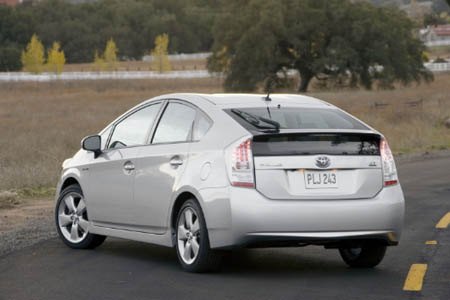
First, let’s just get the usual stuff out of the way for those of you that have been living in a snow cave near the polar cap: The Toyota Prius sort of knocked the auto world sideways when it first appeared, being a half-way step between a gasoline engined car and an all electric ride. The car you see here, the 2010 Toyota Prius is the third gen of the car for North America. What makes it so special? What’s in Gen III?

08_10_Prius-prv.jpg

09_10_Prius-prv.jpg

First off, better mileage. The first-generation Prius, got around 41 EPA combined mpg, while the second gen put in 46 mpg, combined city/highway. Using a combination of technologies, fuel efficiency was increased to an estimated 50 miles per gallon for the new Prius. Not bad, huh? And it’s actually even more impressive when you realize that the 2010 Prius uses a bigger IC engine. A larger and more powerful 1.8-liter Atkinson-cycle, four-cylinder engine to be specific. Contrary to what you’d think, the larger engine actually helps improve highway mileage. “By making more torque, the new engine can run at lower average rpm on the highway. When operating at lower rpm, the new engine uses less fuel. Mileage is especially improved in cold-start conditions and at higher speeds.”

14_10_Prius-prv.jpg

18_10_Prius-prv.jpg

20_10_Prius-prv.jpg

The real trick stuff, and most of the gearhead improvements are in the Hybrid portion of the new Prius (as you would expect).

102_10_Prius-prv.jpg

The hybrid drive system in the 2010 Prius, Toyota calls it the Hybrid Synergy Drive, is 90 percent newly-developed with significant improvements over previous models. Let’s just list them:

* The transaxle is lighter in weight and reduces torque losses by as much as 20 percent compared to the previous model.
* The inverter, which converts direct current to alternating current, has a new direct cooling system to reduce size and weight.
* Taken together, the inverter, motor and transaxle are smaller and 20 percent lighter.
* A newly developed electronically controlled regenerative braking system has been adopted, with control logic optimized to enhance regeneration.

The 2010 isn’t just a re-body, now is it?

41_10_Prius-prv.jpg

45_10_Prius-prv.jpg

Speaking of the body, Toyota has refined, rather than revolutionized that aspect of the 2010 Prius as well. It still looks halfway between a car and something from DARPA, but there have been all manner of refinements to the exterior. For starters, the 2010 Prius will boast the lowest Cd (that’s coefficient of drag), coming in at 0.25, or essentially one quarter the drag of two license plates. Toyota has massaged the body, front and rear, top and bottom - paying particular attention to underbody aerodynamics.

82_10_Prius-prv.jpg

90_10_Prius-prv.jpg

And up on the roof? Solar cells!

34_10_Prius-prv.jpg

36_10_Prius-prv.jpg

The solar panels are located over the rear seating area and power a new ventilation system. The solar powered ventilation system uses an electrically powered air circulation fan that does not draw from the engine at all. The system prevents the interior air temperature from rising while the vehicle is parked, making the cool-down time shorter when the driver returns to the vehicle, thus reducing the use of air conditioning. Smart! The 2010 Prius is the first car in the world to have this tech, and it can be remotely operated, so the driver can adjust the interior temperature for comfort before getting in the car.

Here’s a video of the 2010 Prius, straight from Toyota:

48_10_Prius-prv.jpg

Here’s Toyota’s press release:

Toyota Reveals All-New Prius
DETROIT, January 12, 2009 — Toyota Motor Sales (TMS), U.S.A., Inc., unveiled the all-new 50-mile-per gallon rated third-generation Prius hybrid vehicle today at the 2009 North American International Auto show.

Celebrated as the benchmark for cars of the future, the Prius has delivered superior fuel economy and ultra-low emissions to more than one million owners worldwide for more than 10 years.

The midsize third-generation 2010 Prius will offer even better mileage ratings, enhanced performance, and innovative design features. It will be quieter, roomier, and equipped with advanced standard and available features such as a moonroof with solar panels, four driving modes, Intelligent Parking Assist (IPA) and steering wheel touch controls that display on the instrument panel.

An Eco-Icon

The first-generation Prius entered the market in 1997 as the world’s first mass-produced hybrid. The name Prius, “to go before” in Latin, became symbolic of a car that was launched even before environmental awareness had become a mainstream social issue.

From the beginning, Toyota’s full-hybrid system was developed in-house and has become a driving force behind advanced vehicle technology. The company’s exclusive Hybrid Synergy Drive System was introduced in 2004 on the second-generation Prius. Since then, more than 670,000 have been sold in the U.S.

In designing the new, third-generation Prius, Toyota engineers combined a careful refinement of existing systems with an aggressive measure of new technology necessary for the future of automobiles.

Fuel Economy and Environmental Performance

The new Prius will be built using processes that reduce pollution in every stage of vehicle life, from production and driving, through to disposal.

The third-generation Prius extends its record of continuous improvement in fuel economy. The first-generation Prius, which was rated 41 EPA combined mpg, was replaced by the current model, which is EPA rated at 46 mpg, combined city/highway. Using a combination of technologies, fuel efficiency was increased to an estimated 50 miles per gallon for the new Prius.

A larger and more powerful 1.8-liter Atkinson-cycle, four-cylinder engine will power the new Prius. Contrary to conventional wisdom, the larger engine actually helps improve highway mileage. By making more torque, the new engine can run at lower average rpm on the highway. When operating at lower rpm, the new engine uses less fuel. Mileage is especially improved in cold-start conditions and at higher speeds.

Use of an electric water pump and a new exhaust gas recirculation (EGR) system also contribute to the engine’s efficiency. The 1.8-liter Prius engine is the first Toyota power plant that requires no belts under the hood for better fuel economy and less potential maintenance.

A multi-information display panel that monitors fuel and energy consumption is standard. It provides feedback on the Prius’ efficiency using three different displays to help the driver acquire economical driving habits.

Unlike most other hybrid vehicles available, Prius has been a “full” hybrid since introduction. This allows it to run on engine alone, battery alone, or a combination of both. The system blends the best of parallel hybrid and series hybrid designs to achieve the ability to operate on the electric mode alone, and to charge the batteries while the car is running.

The patented Hybrid Synergy Drive system in the 2010 Prius is 90 percent newly-developed with significant improvements over previous models.

* The transaxle is lighter in weight and reduces torque losses by as much as 20 percent compared to the previous model.
* The inverter, which converts direct current to alternating current, has a new direct cooling system to reduce size and weight.
* Taken together, the inverter, motor and transaxle are smaller and 20 percent lighter.
* A newly developed electronically controlled regenerative braking system has been adopted, with control logic optimized to enhance regeneration.

The new Prius will offer three alternative driving modes. EV-Drive Mode allows driving on battery power alone at low speeds for about a mile, if conditions permit. There is also a Power Mode, which increases sensitivity to throttle input for a sportier feel, and an Eco Mode, which helps the driver achieve their best mileage.

Cutting Edge Styling

In designing the new Prius, aerodynamic performance was an important factor. The goal was to create a beautiful silhouette, while not compromising function. Designers preserved the dynamic triangle form of the

current model–instantly recognizable as a Prius–but made alterations to the overall profile, pillar position and angle. The front pillar, extended forward, helps refine the performance-focusing, shaped form.

The overall height of the Prius is the same, but the roof profile is altered by moving the top of the roof 3.9 inches to the rear. This emphasizes the wedge shape, and also allows for enhanced rear headroom and improved aerodynamics.

The design of the new Prius’ front and rear corners are sharp, sporty and aerodynamic. Strong side character lines, rising from front to rear, define the glazed geometric shape. Viewed from the rear, wider rear treads provide a solid, firmly rooted stance.

Dimensionally, the new Prius has the same wheelbase as the current generation. Overall length is slightly increased by 0.6 inches, in part by moving the front cowl forward.

World’s Lowest Cd

The new Prius received more wind tunnel hours of testing than any other Toyota in history, resulting in the cleanest aerodynamic profile of any mass-produced vehicle in the world. By focusing on the shape of the body, underfloor, wheelhouse liner and shape of the wheels, the designers of the new Prius were able to reduce the coefficient of drag (Cd) value to 0.25, compared to 0.26 for the previous model. The airflow under the car was studied extensively. Engineers made changes to the shape of the fender liner, front surface of the underfloor, and added a fin at the rear floor cover to increase linear stability.

Advanced Equipment For a New Era

An available sliding glass moonroof is packaged with solar panels, located over the rear seating area, that power a new ventilation system. This solar powered ventilation system uses an electrically powered air circulation fan that does not require engine assist. The system prevents the interior air temperature from rising while the vehicle is parked, making the cool-down time shorter when the driver returns to the vehicle, thus reducing the use of air conditioning.

The remote air-conditioning system is the first system in the world to function on battery-power alone and that can be remotely operated, so the driver can adjust the interior temperature for comfort before getting in the car.

Reducing the vehicle’s power consumption, available LED (light emitting diode) lamps are used for low beams and also in the tail and stop lamps. Air conditioning, a major energy drain, has been re-engineered to increase efficiency and cool-down performance. In addition, an exhaust heat recirculation system reduces heat waste by warming engine coolant during cold startup, for improved performance. It also heats up the passenger cabin more efficiently.

Enhanced Vehicle Performance

The next-generation Prius is built on a new platform, which enables improved handling stability, quieter operation, and collision safety. The suspension consists of front struts and a rear intermediate beam design, as before, but handling stability is advanced by improving the stabilizer layout, higher caster angle and tuning the bushing characteristics. Disc brakes are now used on all four corners, replacing the front disc/rear drum brakes in the current model.

Weight was saved through use of aluminum in the hood, rear hatch, front suspension axle and brake caliper and super high-tensile steel in the rocker inner, center pillar, and roof reinforcement. To meet customer expectations for everyday performance, zero-to-60 acceleration has been improved to 9.8 seconds, more than a second faster, in internal testing.

Better-performing sound insulation, working with improved vibration damping, has been installed in various locations to reduce road noise.

Functional Interior Is Bigger on the Inside

Proving that small changes add up to big gains, the cargo area of the new Prius was expanded 0.4 inches in length and 2.2 inches in width by using a new and an improved layout of the battery cooling unit.

Rear seat legroom is enhanced by a new space-saving contoured front-seat design.

Viewed from the cockpit, the center cluster smoothly flows from the instrument panel to the console. Handy storage space has been added under the shift lever by taking advantage of the shift-by-wire system. Simple, fin-type air vents are consistent with the cabin’s efficient appearance. Judicious use of silver accents adds a finished, technical feel.

Touch sensors on the steering wheel switches are designed to reduce driver eye movement for better concentration on the road. When the driver touches the audio or info switch located on the steering wheel, a duplicate image is displayed on the instrument panel, directly in front of the driver. This system, called Touch Tracer, is the first system in the world to allow steering wheel controls to read out on the instrument panel.

The ECO indicator on the Multi-Informational Display (MID) provides driver feedback for lower fuel consumption.

In pursuit of developing various advanced technologies aimed at realizing sustainable mobility, Toyota will use plant-derived, carbon-neutral plastics in the 2010 Prius. The newly-developed plastics, known as “ecological plastic,” will be used in the seat cushion foam, cowl side trim, inner and outer scuff plates, and deck trim cover. Ecological plastic emits less CO2 during a product lifecycle (from manufacturing to disposal) than plastic made solely from petroleum; it also helps reduce petroleum use.

Safety Enhancements

The new Prius was designed to comply with class-top level collision safety performance in each global region of sale, and to accommodate increasingly strict safety requirements in the future.

In addition to advanced driver and front passenger Supplemental Restraint System (SRS) airbags front and rear side curtain airbags, driver and passenger seat-mounted side airbags and driver’s knee airbag are standard equipment.

Active headrests are used in both front seats to reduce the possibility of whiplash in a collision. Anti-lock Brake System (ABS), Electronic Brake Distribution (EBD), Brake Assist (BA), electronic traction control (TRAC) and Vehicle Stability Control (VSC) are included with Toyota’s standard Star Safety System.

Dynamic Radar Cruise Control system, using advanced millimeter wave radar, is an available option. The system also enables Lane Keep Assist, which helps the driver stay safely within the lane, and the Pre-Collision System, which retracts seatbelts and applies the brakes in certain conditions when a crash is unavoidable.

Next-generation Intelligent Parking Assist features simplified settings to help guide the car into parking spaces.

A backup monitor, which provides a view of rear obstacles when reverse is engaged, is available with an optional voice-activated navigation system.
Safety Connect, Toyota’s first safety and security service, includes automatic collision notification, stolen vehicle locator and an SOS call button. Safety Connect will be available a few months after launch.

The development of the Prius has required applications for over 1,000 patents filed across the world, of which 292 are U.S. applications.

Pricing for the 2010 Prius will be announced shortly before it goes on sale late spring.

2010 PRIUS PRELIMINARY SPECIFICATIONS

POWERTRAIN

1.8-liter four-cylinder engine with VVT-i

Engine horsepower: 98 hp @ 5,200 rpm

Engine torque: 105 lb-ft @ 4,000 rpm

Electric motor: Permanent magnet synchronous motor

Electric motor power output: 80 hp/153 lb-ft torque

Hybrid system net horsepower: 134 hp

Emission rating: SULEV (with AT-PZEV)

Electronically controlled continuously variable transmission

Drive System: Front-wheel-drive

Hybrid battery pack: Nickel-metal hydride

Estimated fuel economy: 50 mpg (combined)*

DIMENSIONS (inches)

Overall Length: 175.6

Overall Width: 68.7

Overall Height: 58.7

Wheelbase: 106.3

Ground clearance: 5.5

Coefficient of Drag: 0.25

Wheels: 15-inch alloy wheels

17-inch alloy wheels (optional)

Tire Size: 15-inch: 195/65R15

17-inch: 215/45R17 (optional)

Seating Capacity: 5

EPA class rating: Midsize

* Preliminary figure based on Toyota’s internal testing. Actual mileage will vary.

Tuesday, January 13, 2009

2010 Toyota Prius - Auto Shows

0 comments

Among the battery of fresh hybrids and electrics being shown at this year’s Detroit show—which includes Honda’s all-new Insight—Toyota trots out its new version of the Prius, the hybrid that sort of started it all. This latest Prius marks the third generation of the iconic fuel miser, and it comes armed with magical-sounding 50-mpg combined estimated fuel-economy rating, topping the last car’s 46-mpg mark.

More Power Means More Greener?

A 1.8-liter, Atkinson-cycle four-cylinder replaces the 1.5-liter currently on Prius duty. It puts out 98 hp and 105 lb-ft of torque, up from 76 and 82, respectively. Toyota claims the increased torque allows the engine to run at lower rpm on the highway, saving more fuel. An 80-hp electric motor ups the hybrid system’s total output to 134 hp. That’s good for a 0-to-60-mph time of 9.8 seconds, according to Toyota—nearly three seconds quicker than we achieved with the current model.

A host of changes are responsible for the 4-mpg-better fuel-economy number. The water pump has gone electric, banishing the last of the serpentine-driven accessories for a fully beltless engine bay, which should reduce service complexity and parasitic losses. Toyota says it has changed or replaced 90 percent of the Hybrid Synergy Drive system, which now includes a direct cooling system for the AC/DC inverter that helps reduce the unit’s size and weight. As a system, the inverter, transaxle, and motor are smaller, with weight reduced by a claimed 20 percent. The regenerative-braking system is new and is aimed at recovering more energy. A new exhaust-heat recirculation system—as seen on the latest Lexus RX450h hybrid—warms coolant during cold starts for fewer emissions and allows for quicker cabin heating, as well.

2010 Toyota Prius Sees Light in Detroit

0 comments

We’ve wrote about Prius before and if you remember we even got the leaked images of what looks like the 2010 Toyota Prius. Meanwhile, the Japanese waited patiently for this years Detroit Auto Show and got it all unveiled it to the public. Technology improved and the fact that it includes 90% more parts than its predecessor and that the refined hybrid powertrain of the engine, stands evidence. The 50mpg car, is 25% better than the first Prius and some 9% better than the second generation that used to get a 46 mpg rate. With a new engine - a 1.8-liter four cylinder petrol that outputs 98 horsepower and 105 ft-lb of torque, the 2010 Toyota Prius goes from naught to 60mph in 9.8 seconds rather than the 10.5 from its previous version. The improvements are endless, so if you care about the environment you should consider a Prius. Read on for more specs. It doesn’t look bad, is it?

Monday, January 12, 2009

Toyota's 2010 Prius breaks cover

0 comments

Toyota's 2010 Prius breaks cover January 12, 2009 The third-generation Toyota Prius 50 MPG hybrid was revealed today at the 2009 North American International Auto show. The new Prius features a more aerodynamic shape, larger 1.8 liter petrol engine with optional roof-mounted solar panels and intelligent park assist. Unfortunately the 2010 Prius is not yet a plug in hybrid and still comes with a relatively small Nickel-metal hydride battery so EV only mode will not exceed approx 5 miles. While the current model Prius is EPA rated at 46 mpg, the third-generation Prius has increased fuel economy to an estimated 50 miles per gallon for the new Prius (it has not been EPA rated as yet).

90% new Drive System

The move from 1.5 liter to a larger and more powerful 1.8 liter Atkinson-cycle, four-cylinder engine should significantly improve the power to weight ratio and the performance of the Prius. The current 1.5l Prius has always scored well in city driving due to its regenerative braking but it has been noticeably lacking in highway performance due to its small engine capacity and the additional weight of a battery pack compared to vehicles with similar engine capacity. Contrary to conventional wisdom, the larger engine actually helps improve highway mileage. By making more torque, the new engine can run at lower average rpm on the highway. When operating at lower rpm, the new engine uses less fuel.

Toyota has used an electric water pump for the first time that increases engine’s efficiency by removing auxiliary loads from the engine’s crankshaft. These loads, such as the power steering and the air conditioning compressor, are powered directly from the 500v battery at achieve much higher energy efficiency. The 1.8-liter Prius engine is the first Toyota engine with no belts under the hood. The 4 cyl VVT-I puts out 98 hp (72 Kw) @ 5,200 rpm with 105 lb/ft (142 Nm) @ 4,000 rpm compared to 76hp (57 Kw) and 82 ft/lb (111 Nm) in the current model.

The Hybrid Synergy Drive system in the 2010 Prius is 90 percent newly developed with significant improvements over previous models. These include a lighter continuously variable transmission (CVT), an improved inverter cooling system and improved control logic to enhance brake regeneration.

The electric motor is still a permanent magnet AC synchronous motor (BLDC). Power has been increased from 50kw (67hp) to 59kw (80hp) while the Electric only torque figure provided in this press release says 153 ft/lb but the current model Prius has 295ft/lb (400Nm) so we’ll take that as a Toyota typo. Toyota say net hybrid systems power has increased from 110 hp (82 Kw) to 134 hp (98.5 Kw).

Worlds lowest Cd

The aerodynamic design of the new 2010 Prius was an important factor. The goal was to create a wedge shape with steeply raked windscreen and square rear end corners to reduce aerodynamic drag. The overall height of the Prius is the same, but moving the top of the roof 3.9 inches to the rear alters the roof profile. This also allows for enhanced rear headroom and improved aerodynamics. The new Prius received more hours of wind tunnel testing than any other Toyota in history, resulting in the cleanest aerodynamic profile of any mass-produced vehicle in the world. By focusing on the shape of the body, underfloor, wheelhouse liner and shape of the wheels, the designers of the new Prius were able to reduce the coefficient of drag (Cd) value to 0.25, compared to 0.26 for the previous model. The airflow under the car was studied extensively. Engineers made changes to the shape of the fender liner, front surface of the underfloor, and added a fin at the rear floor cover to increase linear stability.

An optional sliding glass roof is packaged with solar panels, located over the rear seating area, that powers a new ventilation system. This solar powered ventilation system uses an electrically powered air circulation fan that does not require engine assist. The system prevents the interior air temperature from rising while the vehicle is parked, making the cool-down time shorter when the driver returns to the vehicle, thus reducing the use of air conditioning. As it is usually hottest inside a vehicle when the sun is shinning rightest this should prove an efficient way to power a cooling system.

2010 Toyota Prius Preview

0 comments

The third-generation Toyota Prius is official, with a debut at the 2009 Detroit auto show--and it's rated at 50 miles per gallon. The 2010 Toyota Prius has already had a mini-unveiling last fall, when leaked photos made their way to the Web and were confirmed as accurate by Toyota. Today, Toyota is showing off the Prius Since Toyota's sold ..

Toyota unveils 2010 Prius hybrid

0 comments


Following months of conjecture and a number of leaks, Toyota has finally unveiled its all-new 2010 Prius hybrid. Using the 2009 Detroit Auto Show as a launching pad, the third-generation Prius is scheduled to simultaneously hit showrooms in the U.S. and Japan by late spring and will filter across to other markets soon after. The 2010 Prius will offer even better mileage ratings and performance than the current model, while also being quieter, roomier, and equipped with more features. Some of these include an available moonroof with solar panels, four driving modes, Intelligent Parking Assist (IPA) and steering wheel touch controls that display on the instrument panel. The first-generation Prius, which was EPA rated at 41mpg for the combined cycle, was replaced by the current model, which is EPA rated at 46mpg for the combined cycle.

2010 Toyota Prius

Sunday, January 11, 2009

Toyota to Bring Plug-In Prius to U.S. in Late 2009 - Auto Shows

0 comments

Breathless Prius fans, hark! From high upon Mount Hybrid has come word that the legendary and mythical plug-in version of the Prius hybrid will finally arrive on U.S. streets late this year. Now that we’ve built you up, allow us to tear you down: just 150 will be coming to America from a miserly 500-car global allotment, and all will be placed in the hands of “lease-fleet” customers such as utility companies, universities, and city governments. None will be made available to individual consumers—Larry David and Leo DiCaprio are reportedly heartbroken.

Based on the third-gen 2010 Prius, the plug-in version will use Toyota’s first lithium-ion batteries in place of the workaday model’s nickel-metal hydride units. Nickel batteries, Toyota says, are optimal for use in regular hybrids because of their ability to operate in the narrow band of charge required. Plug-in applications, however, charge harder and deplete farther, so lithium-ions are more appropriate.

Saturday, January 10, 2009

Who needs a hybrid?

0 comments

Green is for sale. But who’s buying? Seriously, who needs a hybrid? Without question, fuel-saving technology is essential both for automakers who hope to compete in the next decade and for a nation stricken by energy problems. But if you dig through the sales numbers over the past few months, it’s easy to see that more consumers are asking whether the extra cost of a hybrid-electric car is really worth it.

In December, sales of Toyota’s Prius—the standard bearer of all hybrids—fell by a whopping 45%. In November, sales were off 48%. During those two months, gasoline prices plummeted below $2 a gallon. This proves that America hasn’t turned truly green. More likely, they turned red at the pump back in July when gasoline prices topped $4 a gallon. People fled their suvs and bought smaller cars and hybrids like there was a fuel shortage.
But once gasoline prices fell back to levels that Americans have normally paid, they pulled back on hybrid purchases. Toyota has indefinitely delayed its plans for a Prius plant in Mississippi. Toyota isn’t the only company feeling a pinch. Ford’s Escape hybrid and the competing Saturn Vue hybrid both saw sales sink by more than 40% last month. And the hybrid Civic? Off almost 70%. Ouch.
Jim Lentz, President of Toyota Motor Sales USA, notes that for the year, hybrid sales fell only 12%. That shows better staying power than a car market that fell 18%. His point shouldn’t be ignored. He is also right when he says that in the long run, gasoline prices will rise and hybrids will be a better sell. Plus, he says, 80% of Prius owners trade in for a new one. That means the existing buyers keep coming back.
But annual numbers are padded by the huge fuel-price spike of the first half of the year. Recent months show that when gas prices fall, consumers aren’t buying. This creates a huge dilemma for car companies and policy makers. New fuel economy rules will mandate fuel-saving technology. Carmakers the world over are pushing hybrids and other fuel savers to market. But without a hit to the wallet, Americans still aren’t sold on them. Without a price spike—or a tax on gasoline—carmakers will once again be caught between a policy that demands fuel economy and an American consumer who remains indifferent.

Thursday, January 8, 2009

Official Euro Honda Insight Hybrid Fuel Economy Numbers Leak: Less Fuel-Efficient Than Toyota Prius

0 comments

According to leaked info in Honda's official magazine in Belgium, the European 2009 Honda Insight is less fuel-efficient than the current Toyota Prius — but may only be about 1 MPG less.

Information leaked in Honda's official magazine in Belgium and published late yesterday on Carscoop indicate on the European cycle, the 2009 Toyota Prius (the current model) is officially rated at a combined 54.7 MPG average; the 2009 Insight only manages 53.5 MPG in the same test. Lets do some quick math: In the euro cycle, which is more optimistic than American EPA tests, the Insight is 1.9% less efficient than the current Prius. Using the Prius’s official 46 MPG EPA figure to determine a US EPA cycle projection, we can calculate that the Insight would, all thing being equal, manage 45 MPG. 1 less than the Prius. It should be noted, however, that these EPA numbers are estimates only and not official.

The Insight uses the same 1.3-liter, 4-cylinder gasoline engine as the Civic Hybrid, here delivering 88 HP from the engine and a total of 95 HP combined. The gas engine produces 90 lb-ft of torque while the electric motor makes 76 Lb-Ft.

The Belgian Insight will be offered in two trim levels. Standard on both is ABS, Stability Control, a full compliment of airbags, climate control and a CD radio. The up spec model adds Bluetooth, parking assist, cruise control, fog lights, heated front seats and rain sensors.

Expect more details at next week’s Detroit Auto Show, or before then, if another European division of Honda decides it wants in on the embargo break action.

[via Carscoop]

Tuesday, December 30, 2008

Blue Man Group checks out the 2010 Toyota Prius

0 comments

While Toyota won’t unveil the 2010 Toyota Prius until next month at the 2009 Detroit Auto Show, it has released a little commercial/teaser joining forces with the Blue Man Group.

Not much to say here other than it’ll be pretty interesting to see who gains more traction after the show next month - the 2009 Honda Insight or the 2010 Toyota Prius.

2010 Toyota Prius:

Friday, December 26, 2008

Tech-Savvy Prius Owner Uses Hybrid To Power House During Snow Storm

0 comments

Tech-Savvy Prius Owner Uses Hybrid To Power House During Snow Storm

When an ice storm knocked out power to much of New England, one Toyota Prius owner reached for his inverter and powered some of his home with the happy little hybrid. Smug FTW? Yes.

John Sweeney, of Harvard, Massachusetts, was among the many residents of Eastern Mass without power after a big ice storm hit on December 12th. Sweeney, an electrical engineer, saw his Prius as the answer. Using an inverter, he converted the DC power coming out of the car into AC power for his house. Though he couldn't run his entire house one his one car, they were able to get approximately 17 Kilowatt hours of energy. This was enough to power his refrigerator/freezer, television, lights, wood stove fan and accessories for a few days. Although anyone can use a regular DC power supply, like the battery found in a non-Hybrid car, but a hybrid is ideal.

First, the Prius carries a much larger batter pack than a regular car, allowing someone to power more appliances for longer than the conventional AC Delco found in most cars. Second, unlike some backup battery systems found in homes, the Prius, like other cars, can recharge its batteries with its normal internal combustion engine. And here's the best part — because the Prius automatically turns itself on when the batteries drain to a certain level, Sweeney left the car running and it automatically turned over when it needed to recharge — about once every 30 minutes. If you were trying to do what Sweeney did with a non-hybrid, you'd find yourself spending a lot more time outside in the cold. The efficiency of the auto-on feature meant Sweeney only used around five gallons of gas. As with any time you're trying to use your vehicle as a generator, you'll probably want to use a well-ventilated area.

If any of Sweeney's neighbors thought he was smug about his car choice before the storm they must have really hated him when he turned on the television and lights while they huddled for warmth on the hood of their Tahoe. Hat tip to Danny!

[Boston Business Journals]

Wednesday, December 24, 2008

2010 Toyota Prius Teasers Show Engine Bay For First Time

0 comments

The exhausting and inconsequential teaser series surrounding the 2010 Toyota Prius continues and now we get to see something that matters — the Hybrid Synergy Drive nestled snugly in its engine bay.

Along with the engine bay shot we get a peek at such hugely exciting bits as the headlight at night, a closeup of the door handle, and the Toyota badge. We can't tell if the badge is lit up or just has a printed blue effect behind it, but if Toyota keeps this kind of excitement up, we probably won't make it to the Detroit Auto Show unveil. [Carscoop]

Wednesday, December 17, 2008

Toyota’s iQ and Prius to spawn seven-seater MPV

0 comments

Toyota’s iQ and Prius to spawn seven-seater MPV

We really can’t emphasize the consumer shift towards more compact vehicles and it seems like automakers are catering to that shift even when it comes to minivans. According to AutoExpress Toyota’s next MPV will be based on the Estima concept and surprisingly - the iQ and the Prius.

A source told the publication that Toyota is “looking at a seven-seater based on the Prius. It would use a lithium-ion battery, and could be here by 2012.”

Technicians behind the iQ say that the new MPV will also use the compact car’s technology to squeeze in seven-seats into a Yaris. Chief engineer Hiroki Nakajima said that Toyota is always looking for clever engineering and packaging solutions.

“For example, we’re working on a seven-seater that’s the size of the Yaris. We can do it, and give limo-like legroom in the back,” said Nakajima.

Source: AutoExpress

Tuesday, December 16, 2008

Toyota to debut battery electric vehicle concept in Detroit

0 comments

Besides showing us the next-generation 2010 Toyota Prius and a new dedicated hybrid for the Lexus brand, Toyota announced today that it will debut a battery electric-vehicle concept at the 2009 North American International Auto Show in Detroit Next month.

Toyota has released no details or images of the electric-vehicle concept so we’re not sure whether it will be a plug-in version of the Prius.

That’s all the info we have right now but we’ll bring you more details next month from Detroit.

Thursday, November 27, 2008

Toyota won’t launch a separate Prius brand

0 comments

Seems like the on-again/off-again rumors of a sub-Prius brand have been put to rest. According to Toyota’s UK managing director Miguel Fonseca, Toyota won’t be launching a separate Prius brand. However, Fonseca did say that Toyota is working on new Prius body styles that will arrive shortly after the third-generation Prius is unveiled at the 2009 Detroit Auto Show in January.

Fonseca didn’t outline what body styles we can expect, but we’ve heard rumors of an MPV hybrid and coupe hybrid based on the Prius.

Fonseca also said that Toyota isn’t going to use lithium-ion battery technology anytime soon. Engineers at Toyota believe that lithium-ion batteries aren’t ready for mass production as of yet. It was previously reported that the after the third-generation model, which will still use nickel-hydride batteries, Toyota will switch to lithium-ion batteries.

Source: AutoCar

Thursday, November 20, 2008

More Photos of the 2010 Toyota Prius Show up on the Web

0 comments

2010_toyota_prius_leak7.jpg
More photos of the next-gen 2010 Toyota Prius are showing up on the internet. A few weeks ago the first photos of the new Prius leaked onto PriusChat and were confirmed to be accurate photos by Toyota.

The 2010 Prius is set for a world debut at the Detroit Auto Show in January. What we do know about the new hybrid is that it will keep its iconic shape with a slightly larger body and more distinct nose. Inside there is an all-new dash design that looks far more complicated than the current generation.

The 2010 Prius is also expected to be more powerful and at the same time achieve better gas mileage.

Followers


Toyota Cars. Copyright 2008 All Rights Reserved